If you’re planning to move to Italy or have already settled here, one of the first things you’ll need to know about is the Codice Fiscale. This essential tax code is similar to a social security number and is required for a range of activities, from signing a lease or setting up a bank account, to accessing healthcare or registering for school.
What is the Codice Fiscale?
The Codice Fiscale is a unique identification number assigned to each resident in Italy, whether they are Italian citizens or foreign nationals. It is used by the Italian government for tax purposes and is required for many official processes in Italy. In fact, without a Codice Fiscale, you won’t be able to perform many routine administrative tasks, such as renting a property or even registering for healthcare.
Is the Codice Fiscale issued as a physical card?
No, you simply use the number on the certificate of the tax code assigned to you. The Tessera Sanitaria (Italian Health Card) has replaced the plastic fiscal code card and is issued to those who qualify for National Health Service (SSN, Servizio Sanitario Nazionale) benefits.
How to Apply for the Codice Fiscale
Newborns: In Italy, newborns automatically receive a Codice Fiscale when they are registered in the municipal population registry (Anagrafe). This process takes place through a telematic connection with the Anagrafe Tributaria (Tax Registry) at the local Comune (municipality).
Foreigners: The process differs depending on your status and where you apply from:
∙ At the Immigration Office: Foreigners applying for a visa (whether for work or family reunification) can request a Codice Fiscale directly at the Sportello Unico per l’Immigrazione (One-Stop Immigration Office). When you attend the office for your appointment, you will receive the Codice Fiscale and a certificate confirming the issuance.
∙ At the Questura: Foreign nationals who are already in Italy and need to apply for or renew their Permesso di Soggiorno (residence permit) can also apply for the Codice Fiscale through the Questura (police headquarters). The process is done electronically via the Anagrafe Tributaria.
Residents Abroad: If you’re a citizen of a foreign country and you are living abroad, you can still apply for the Codice Fiscale through an Italian consulate in your home country. The consulate will process your request through a telematic link to the Anagrafe Tributaria.
Special Notes on the Codice Fiscale
The Revenue Agency (Agenzia delle Entrate) is the only authority allowed to issue the Codice Fiscale. No third parties, except for Sogei (a state-owned IT company), can create software for calculating the Codice Fiscale or print the official card. Be wary of external companies offering this service for a fee.
A citizen without a fiscal code can request it at any Revenue Agency office, using the AA4/8 form. The request must correctly indicate the personal details and the tax domicile, where the card with the assigned fiscal code will be delivered.
Along with the request, the Italian citizen or a citizen of a European Union state must present a valid identification document. For minors, the request is presented by the parent who shows their own identity document. A citizen from a non-EU country must alternatively present:
∙ A valid passport, with the relevant visa (when required), or another document recognized by Italian authorities
∙ A certificate of identity issued by the diplomatic or consular representation in Italy of the country of origin (with a relevant photo of the interested party)
∙ A valid residence permit
∙ An identity card issued by the municipality of residence.
Do you need professional assistance with getting your Italian fiscal code?
Feel free to contact us at [email protected]. Whether you need help with visas, permits, citizenship, or other essential services, we are here to support you every step of the way. Check out our services here.

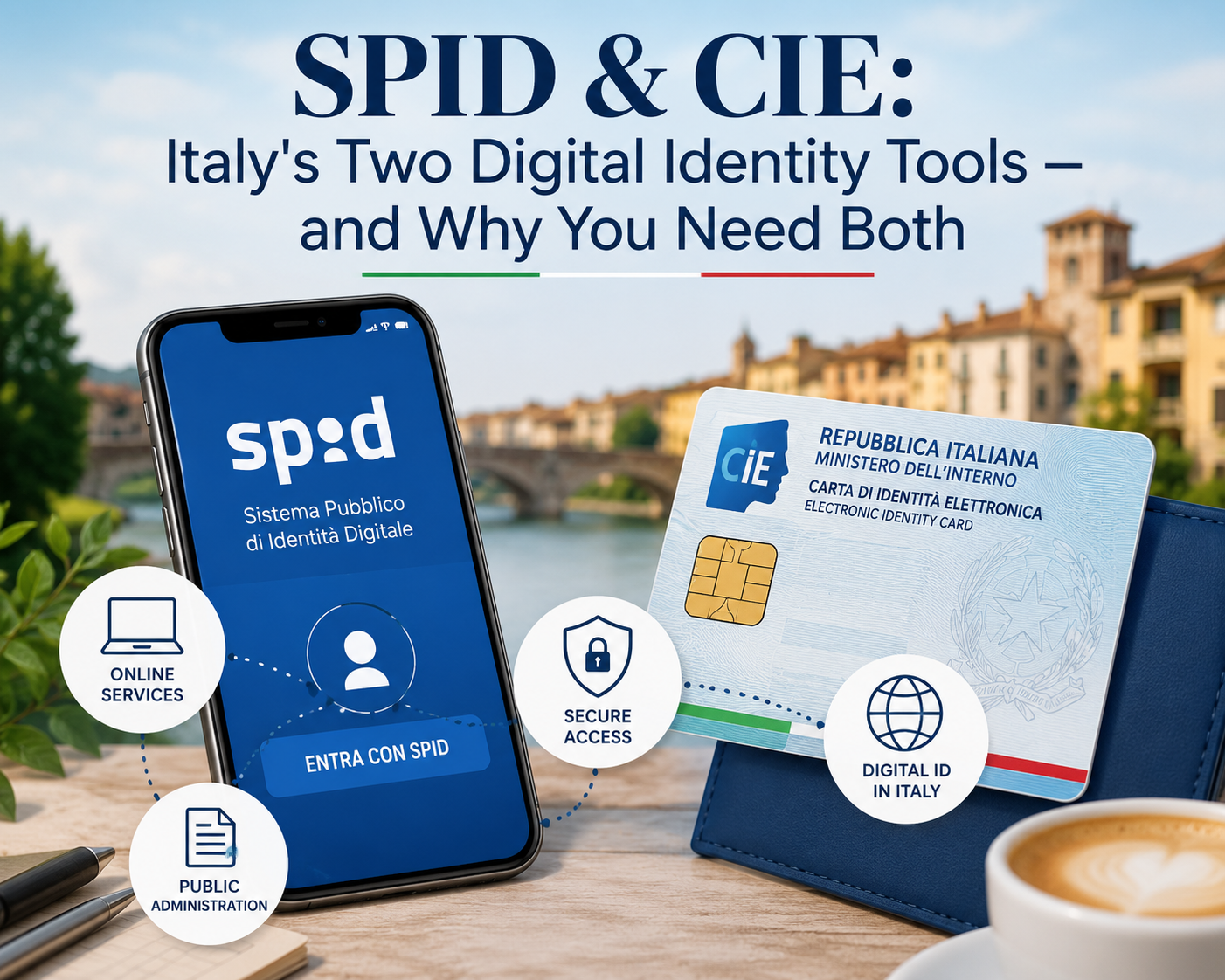
SPID & CIE: Italy’s Two Digital Identity Tools — and Why You Need Both
If you’re living in Italy, SPID and CIE aren’t optional extras — they’re how you access nearly every government service, from booking your Questura appointment to filing taxes online. Here’s how to get both. CIE — Carta d’Identità Elettronica Your Italian electronic ID card, issued by your local Comune. It’s also a digital key […]

Rental Deposit Italy: How to Get Your Money Back
How to Get Your Rental Deposit Back in Italy Protect your caparra before you even unpack — practical, legally sound advice for expats renting in Italy. Securing your rental deposit Italy return is one of the biggest worries for expats. One of the most common questions we hear is, “How can I make sure I […]

What’s On in Italy July 2026: Best Festivals & Events
From legendary bareback horse races to starlit open-air operas, discover the absolute best cultural festivals taking over the peninsula this month. July in Italy is a spectacular explosion of culture, music, and open-air celebrations. As the summer heat settles over the beautiful Mediterranean landscape, the country’s historic piazzas, ancient amphitheaters, and coastal waters transform into […]

Riding Through History: Vespa Turns 80 in the Heart of the Eternal City
From a post-war dream to a global symbol of freedom and style, Vespa is gearing up for the biggest party in its history. Vespa changed the world of urban mobility forever when an intuition on two wheels came to life eight decades ago. On April 23, 1946, Piaggio filed the patent for a “practical nature” […]

My New Life in Abruzzo: A Journey of Reinvention and Belonging
Benvenuti! Welcome to My Italian Adventure Hi, I’m Tim König, and this is the story of how my husband Giulio and I bid farewell to our familiar life in the United States to begin a vibrant new chapter in Abruzzo, Italia. What started as a late-night dream shared over coffee eventually blossomed into a full-scale […]

Find and Buy Your Ideal Property in Italy (2026)
Finding and Buying Property Investment in Italy Buying a property in Italy can be a complex and daunting process, especially for foreigners who are not familiar with the legal and bureaucratic aspects. That’s why we are here to help you every step of the way, from finding the property to signing the deed of purchase. […]

What’s On in Italy in June 2026
Festivals, Culture, Food & Summer Events June is one of the most exciting months to be in Italy. The days are long, the evenings are warm, and cities, towns, beaches, piazzas, parks, museums, and historic villas come alive with festivals, concerts, food events, outdoor cinema, and national celebrations. Whether you live in Italy, are […]

Executive Overseas Moving and Relocation Services with 1Relocation Worldwide
Global Moving Advocates: Introducing 1RELO Navigating International Relocation Logistics with Absolute Precision Relocating across international borders is a monumental lifestyle milestone, yet the physical reality of transitioning assets across continents presents an incredibly complex logistical puzzle. From navigating intricate maritime freight systems to clearing rigid port-of-entry customs checks, the operational burden requires professional, dedicated oversight. […]