The Aperitivo Culture in Italy
by Adriana ruiz
UPDATED: SEPTEMBER 2026
6 MIN READ
The Aperitivo Culture in Italy: A Complete Guide to Happy Hour, Italian Style
Discover the history, regional differences, essential drinks, and best spots to experience Italy’s beloved pre-dinner ritual
If you have ever taken an early evening stroll through an Italian piazza, you have likely noticed lively crowds gathering around outdoor tables with vibrant orange and red drinks in hand. This is the iconic Italian aperitivo—a cherished post-work ritual that combines delicious drinks, light bites, and great conversation.
More than just a standard “happy hour,” understanding the aperitivo culture in Italy is central to understanding la dolce vita. It marks the transition from the workday to the evening, providing a dedicated moment to slow down, connect with friends, and whet your appetite before dinner.
📌 Guide to Italian Aperitivo Culture
1. The History Behind the Tradition
The word aperitivo comes from the Latin verb aperire, which translates to “to open”—specifically referring to opening or stimulating the appetite before a meal.
🏛️ Ancient Beginnings: The core concept traces back to ancient Rome, where locals enjoyed a gustatio—a light pre-dinner snack paired with wine sweetened with honey or aromatic herbal infusions.
🍷 The Birth of Modern Aperitivo: The modern ritual took definitive shape in late 18th-century Turin when Antonio Benedetto Carpano invented commercial vermouth. This aromatic, fortified wine quickly became a favorite among royals and citizens alike.
🍸 Milanese & Florentine Innovations: In the 19th and 20th centuries, Gaspare Campari introduced his famous bitter liqueur in Milan, giving birth to the Campari Spritz and the Americano. Later, in 1919, Count Camillo Negroni ordered his usual Americano with gin instead of soda water in Florence, creating the world-famous Negroni cocktail.
2. Regional Differences: Northern, Central, and Southern Italy
While aperitivo is enjoyed across the entire peninsula, the local customs and food spreads vary noticeably depending on where you are traveling in Italy.
🇮🇹 Northern Italy (Milan & Turin)
As the historic birthplace of modern aperitivo, Northern Italy treats the tradition with immense gravity. In Milan, ordering a drink often unlocks access to lavish buffets featuring pasta, risotto, roasted vegetables, and modern bites (a style known as apericena). In Turin, vermouth remains king, traditionally served alongside classic tramezzini (crustless tea sandwiches) and regional alpine cheeses.


Photos via Turismo Torino
🎭 Venice & Veneto Region
In Venice and nearby cities like Verona, aperitivo revolves around the Select Spritz or crisp local Prosecco paired with cicchetti—small, bite-sized tapas served on bread crusts or polenta at traditional bacari wine bars.
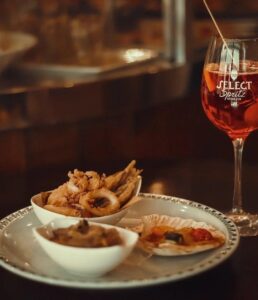
Photo via Ninfea Luxury Suites Venice
🏛️ Rome & Central Italy
Rome balances Northern sophistication with rustic Italian fare. Aperitivo here typically features generous taglieri—wooden boards loaded with cured meats (like prosciutto and salame), local pecorino cheeses, olives, and freshly baked focaccia or Roman pizza bianca.

Photo via Levoni
☀️ Southern Italy & Islands (Naples, Puglia, Sicily)
In the south, aperitivo is often enjoyed later in the evening or even before lunch on weekends. Spreads feature rich regional specialties such as crunchy taralli, fried seafood snacks, mini arancini, and fresh local vegetables preserved in extra virgin olive oil.

Photo via la Repubblica
3. When and How to Do Aperitivo
Unlike North American happy hours that focus primarily on discounted drink prices, an Italian aperitivo centers on quality drinks bundled with food snacks, typically priced between €7 and €15 depending on the city and prestige of the venue.
⏰ Optimal Timing: Aperitivo traditionally takes place between 6:30 PM and 8:30 PM. In the warmer spring and summer months, it frequently extends until 9:00 PM, aligning perfectly with Italian dinner hours which usually start around 8:30 PM or 9:00 PM.
🍕 The Included Food Element: When you order a drink, it is automatically served with food. Depending on the venue, this can range from bowl nibbles (chips, olives, nuts) to full artisanal boards or buffet spreads.
🍷 The Concept of Apericena: A modern trend blending aperitivo with cena (dinner). Popular in major urban hubs, venues serve substantial spreads or hot buffets hearty enough to replace a formal sit-down dinner.
4. Classic Italian Aperitivo Drinks
While you can always order a glass of regional wine (un calice di vino) or a cold draft beer (una birra alla spina), iconic bitter cocktails are the undisputed stars of aperitivo culture in Italy.
Looking to practice your Italian, meet international expats, and experience authentic aperitivo spots in Rome? Join our weekly community gatherings! Check out the Expats Living in Rome Events Calendar to reserve your spot at our next social night.
5. Top Aperitivo Places to Visit in Rome
Rome offers an endless selection of aperitivo settings, ranging from atmospheric cobblestone alleyways to high-end rooftop terraces overlooking historic monuments.
🍸 Freni e Frizioni (Trastevere): A former street mechanic’s shop transformed into a bustling cocktail landmark. Famous for creative craft mixology and energetic crowds spilling onto the piazza.
🏛️ Salotto42 (Piazza di Pietra): Situated directly opposite the illuminated marble columns of the Temple of Hadrian. This stylish “bookbar” is ideal for sophisticated drinks and high-end artisanal snacks.
☕ Bar San Calisto (Trastevere): For an authentic, unpretentious Roman experience. Expect affordable drinks, classic local vibes, and an eclectic mix of students, artists, and neighborhood regulars.
🍷 Il Sorpasso (Prati): A local favorite near the Vatican known for its excellent selection of natural wines, artisanal cured meats, and gourmet taglieri platters in a rustic-chic atmosphere.
🌅 Terrazza Borromini (Piazza Navona): A luxurious choice offering breathtaking panoramic views overlooking Piazza Navona and the city skyline—perfect for a sunset spritz.
6. Aperitivo Etiquette & Local Tips
🍝 Pace Yourself: Standard aperitivo is designed to stimulate your appetite for dinner, not overload it. Enjoy light nibbles while sipping your drink at a relaxed pace.
🥂 Say “Cin Cin” Correctly: When clinking glasses with friends, maintain direct eye contact with each person and say “Cin cin!” or “Salute!” for good luck.
🪑 Seated vs. Standing Service: Sitting at outdoor tables (al tavolo) incurs a small service charge compared to standing at the bar (al banco), but the people-watching experience in the piazza is worth every cent.
Experiencing aperitivo culture in Italy is one of the quickest ways to fall in love with the Italian lifestyle. From quiet neighborhood piazzas to historic city bars, this daily ritual embodies community, relaxation, and genuine appreciation for fine food and drink.
Frequently Asked Questions About Italian Aperitivo
Do I need to make reservations for aperitivo in Rome?
For casual neighborhood bars or local piazzas, reservations are rarely needed. However, if you plan to visit popular rooftop terraces, high-end cocktail bars, or iconic spots in Trastevere on weekend evenings, booking ahead is strongly recommended.
What is the dress code for aperitivo in Italy?
Aperitivo style is generally “smart casual.” While Italians dress stylishly, you do not need formal attire unless you are visiting a luxury hotel bar or high-end lounge. Smart everyday wear or relaxed business attire fits right in.
Is tipping expected at an Italian aperitivo bar?
Tipping is not customary in Italy. If you receive exceptional table service, leaving €1 to €2 per person or rounding up the bill is appreciated, but service charges (coperto) are often already included in your receipt when sitting at a table.
Can solo travelers go to aperitivo alone?
Absolutely! Sitting outdoors at a bustling bar with a drink and a book or simply people-watching is completely normal in Italy. If you want to meet people, joining an organized international expat meetup is an easy way to make social connections.
DREAMING OF OWNING A PIECE OF LA DOLCE VITA?
If lingering over sunset drinks in a Roman piazza has you thinking about making Italy your permanent home or investment destination, navigating the Italian real estate market is your next step. Our legal experts and advisors guide international buyers every step of the way. Send an email to [email protected] to get started.