How to Save Money in Rome
UPDATED: SEPTEMBER 2026
8 MIN READ
How to Save Money in Rome: A Guide for Expats & Travelers
A complete breakdown of budget-saving tips on sightseeing, local dining, transportation, and daily living in Italy’s capital
Learning how to save money in Rome is essential for any international traveler or new resident. Rome is one of the most visited cities in the world, welcoming millions of visitors every year. As a result, enjoying the Eternal City can get expensive quickly unless you know the insider tricks. Living here long-term teaches you that a thrifty mindset goes a long way in Italy’s capital.
Whether you are visiting for a short trip or settling in for a longer stay, here is our comprehensive, updated guide to saving money in Rome without missing out on incredible sights, food, and culture.
📌 In This Guide
1. Sightseeing on a Budget in Rome
🏛️ Enjoy Free World-Class Landmarks: Many iconic sights cost nothing to enjoy from the outside or walk through. Gaze at the Trevi Fountain, people-watch in Piazza Navona, or stroll through historical grounds like Villa Borghese, Parco degli Acquedotti, and Villa Pamphili.
🌿 Explore Ancient Vistas & Parks: Walk or bike along the 2,000-year-old Via Appia Antica (dotted with catacombs and ancient ruins), walk the perimeter of Circo Massimo, or peek through the famous Aventine Keyhole for a perfectly framed view of St. Peter’s dome.
🎨 Visit Art-Laden Churches for Free: Rome has over 900 churches, and almost all are free to enter. They double as stunning art galleries featuring masterpieces by Caravaggio, Michelangelo, and Bernini. Must-visits include Basilica di Santa Maria del Popolo, Santa Maria Maggiore, Santa Maria sopra Minerva, and San Pietro in Vincoli (home to Michelangelo’s Moses).
🎧 Use Free Self-Guided Audio Guides: Skip expensive guided tours by downloading free audio guides before you head out. High-quality free walking apps and podcast series cover the Vatican Museums, Colosseum, Roman Forum, Jewish Ghetto, and Trastevere.
🌅 Seek Out Panoramic Viewpoints: You don’t need to pay for high-rise viewing decks to get panoramic views of Rome. Head to Terrazza del Gianicolo (Janiculum Hill), Aventine Hill (Orange Garden / Giardino degli Aranci), or Pincian Hill (Terrazza del Pincio) above Piazza del Popolo for stunning, completely free skyline views.
📍 Know Key Entrance Rules & Fines
Pantheon: Standard admission is €5 for non-residents. Entry remains 100% free for Rome residents, visitors under 18, worshippers, and all visitors on the first Sunday of the month.
Trevi Fountain: Viewing the fountain from the main square remains free, but access to the close-up lower basin steps costs €2 during peak hours for non-residents.
Spanish Steps: Free to walk and admire, but sitting on the marble steps is strictly prohibited and enforced with hefty local fines.
🗓️ Capitalize on Free Museum Days
First Sunday of the Month: All Italian State Museums (including the Colosseum, Forum, Castel Sant’Angelo, and Galleria Borghese) offer free entry (Domenica al Museo).
Last Sunday of the Month: The Vatican Museums and Sistine Chapel are free from 9:00 AM to 1:45 PM (last entry 12:30 PM).
EXPAT BANKING SERVICE
🏦 Need Help Opening a Bank Account in Italy?
Opening a bank account in Italy as a foreigner can involve complex documentation, residency requirements, and language barriers. Whether you need a non-resident account or guidance navigating local branch requirements, get clear support for your setup. Email us at [email protected] for assistance!
2. Food & Dining Money-Saving Secrets
🍷 Master the Art of Aperitivo: Between 6:30 PM and 8:30 PM, many bars offer aperitivo. When you order a drink (beer, wine, or a Spritz for €8–€12), you gain access to a complimentary spread or buffet of food ranging from pizza slices and cheeses to pasta dishes. Popular expat spots include Doppiozero (Ostiense), Freni e Frizioni (Trastevere), and Analemma (Monti).
🍕 Eat Authentic Italian Street Food: Save on restaurant table service by grabbing quick, delicious local street food: Pizza al Taglio (sheet-pan pizza sold by weight), Supplì (deep-fried rice balls stuffed with mozzarella and ragù), and Trapizzino (warm, triangular pizza pockets stuffed with classic Roman dishes like Pollo alla Cacciatora or meatballs).
☕ Drink Coffee at the Counter (Al Banco): Cafes in Italy are called “bars.” Standing at the bar counter to drink your espresso or cappuccino costs standard local prices (~€1.20 to €1.50). Sitting down at a table (al tavolo), especially near major tourist landmarks like the Pantheon or Piazza Navona, can add steep service charges to your bill.
🍾 Order Vino della Casa & Use Free Nasoni Fountains: When dining out, skip expensive bottled wines and order a carafe of house wine (mezzo litro for half-liter, or litro for full liter) for just €8–€12 per liter. To stay hydrated, bring a reusable bottle and fill up for free at Rome’s 2,500 continuous cold drinking fountains called nasoni.
💶 Understanding Tipping & Coperto
Tipping is not mandatory or customary in Italy. Most sit-down restaurants charge a small cover fee per person called coperto (€1.50–€3.00), which covers bread and table setup. Leaving a few extra coins or rounding up the bill for exceptional service is appreciated, but large percentages are unnecessary.
3. Strategic Neighborhoods & Timing
🏘️ Stay Outside the Immediate Historic Center: Accommodation inside the Centro Storico carries a heavy premium. Opt for vibrant, well-connected neighborhoods like Testaccio, Piramide, Monti, San Giovanni, Pigneto, or San Lorenzo. You’ll enjoy more authentic food, cheaper nightly rates, and easy metro access into the center.
🍂 Travel During Shoulder Season: While Rome welcomes visitors year-round, visiting outside peak summer (aim for October–November or February–March) guarantees lower accommodation prices, milder weather, and much shorter queues.
4. Transportation & Getting Around
✈️ Fiumicino Airport (FCO) Transfers: Skip the €14 express train and take the FL1 Regional Train (€8) stopping at Trastevere, Ostiense, and Tuscolana stations. Official city taxis from Fiumicino to anywhere inside the Aurelian Walls operate on a flat rate of €55.
🚌 Ciampino Airport (CIA) Transfers: Terravision shuttle buses cost around €6 when booked online in advance. Official city taxis from Ciampino to the central city center operate on a flat rate of €40.
🚖 Taxi Apps & Public Transit Passes: Use official apps like Free Now or IT Taxi to track fares and pay securely via app. Single transit tickets (BIT) valid for 100 minutes cost €1.50, while 24-hour (€7) or 7-day (€24) passes offer great savings for frequent riders.
5. Quick Summary Rules for Smart Budgeting
VERIFIED PARTNER SPOTLIGHT
🛡️ Simple, Digital Expat Health Insurance in Italy
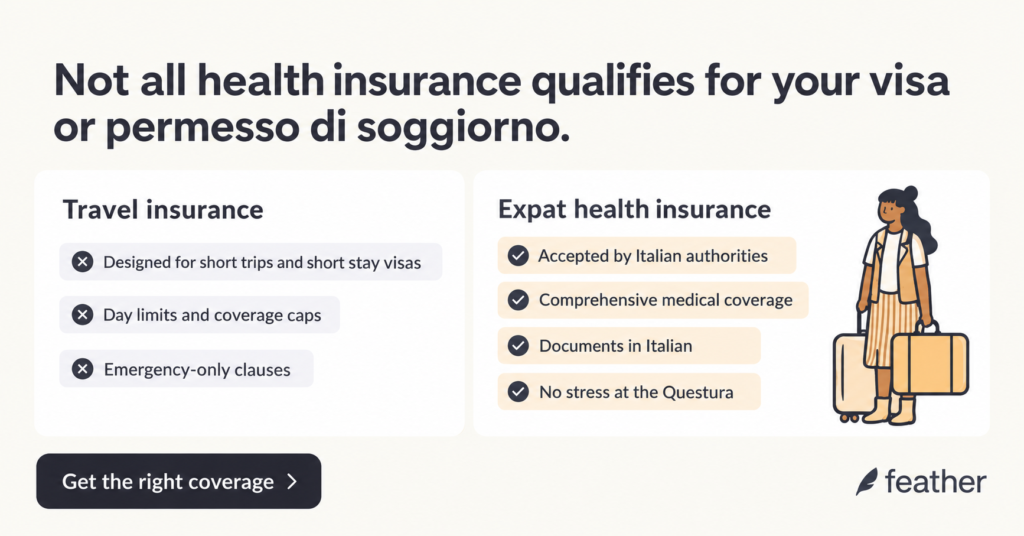
Health insurance is mandatory for almost every Italian visa and Permesso di Soggiorno application or renewal. Feather provides hassle-free health, personal liability, and legal insurance designed specifically for expats living in Europe—with 100% English support, instant digital proof, and fast online sign-up.
Have questions or need assistance choosing the right insurance policy for your visa or residency status? Email us at [email protected]!
Frequently Asked Questions About Saving Money in Rome
Is Rome expensive for expats and tourists?
Rome can be expensive in high-tourist areas around the historic center. However, by staying in local neighborhoods, eating street food, drinking coffee at the bar counter, and taking public transit, living or traveling in Rome is very affordable.
How much is a coffee at the bar in Rome?
An espresso consumed standing at the bar counter (al banco) typically costs between €1.10 and €1.50 across Rome. Sitting down at a table in a tourist square can increase the price significantly.
Are museums free in Rome on certain days?
Yes. All Italian State Museums (including the Colosseum and Forum) offer free admission on the first Sunday of every month. The Vatican Museums offer free entry on the last Sunday of every month.