A Guide to Job Hunting for Expats in Italy
by Adriana ruiz
Relocating to Italy can be an exciting opportunity, and finding a job is an important part of the process. Here are some steps and recommendations to help you get started:
Research the Job Market
When considering a career move to Italy or seeking new opportunities within the country, it’s essential to research the job market thoroughly. This involves understanding the economic landscape, identifying growth industries, and recognizing the regions where specific skills are in high demand.
Economic Landscape and Job Market Trends Italy’s economy is diverse, with a strong presence in manufacturing, automotive, fashion, tourism, finance, technology, and agriculture. However, the job market can be competitive, with certain regions offering more opportunities than others. The unemployment rate, particularly among young people, has been a challenge, though there are signs of improvement.
Growth Industries and Skills in Demand The most dynamic sectors that are currently driving job growth include technology, green energy, and the digital economy. There’s a growing need for IT professionals, engineers, and specialists in sustainable development. Additionally, the luxury goods and fashion industries continue to seek skilled artisans and designers.
Regional Hotspots for Employment Northern Italy, particularly the Lombardy and Veneto regions, is known for its industrial output and financial services, making it a hotspot for professionals in these sectors. Conversely, Southern Italy and the islands are more focused on tourism and agriculture, offering opportunities in hospitality, culinary arts, and agronomy.
Skills Anticipation and Future Trends Skills anticipation activities in Italy provide information on current and likely future skills demand. These include assessments and forecasts by various institutions, which can guide individuals in their education and career decisions. For example, Industry 4.0 initiatives are encouraging the transition to digital technologies, increasing the demand for digital skills.
Learn Italian
While not always mandatory, knowing the language can significantly improve your job prospects and help you integrate into the community.
Boosting Your Career Prospects Proficiency in Italian is often a prerequisite for many jobs, especially in sectors like fashion, design, tourism, and gastronomy, which are quintessential to Italy’s economy. Speaking the local language can set you apart in a competitive job market, showing potential employers your commitment to fully engaging with the workplace and culture. It’s not just a skill—it’s a sign of respect and adaptability.
Enhancing Workplace Integration In Italy, interpersonal relationships are crucial in the workplace. Knowing Italian enables you to communicate effectively with colleagues, understand workplace dynamics, and participate in discussions, which is vital for teamwork and collaboration. It also helps in understanding the nuances of business etiquette and labor laws, ensuring a smoother transition into your professional role.
Prepare Your Documents
When applying for a job in Italy, it’s crucial to prepare your documents meticulously to ensure a smooth application process. Here’s a guide to help you get started:
Updating Your Resume for the Italian Job Market Your resume, or ‘Curriculum Vitae’ (CV), is your first impression on potential employers, so it must be impeccable and tailored to the Italian job market. Here are some tips to update your CV effectively:
– Title: Start with your name as the header, not just ‘Curriculum Vitae’.
– Personal Details: Include your date of birth and a professional photo, which are common in Italy.
– Language Skills: Clearly state your proficiency in Italian and other languages.
– Education and Work Experience: List these in reverse chronological order, with your most recent experiences first.
– Qualifications: Ensure your qualifications are recognized in Italy. You may need to have them officially translated and validated.
– Format: Stick to a standard, chronological format unless research on the company suggests otherwise.
Obtaining a ‘Codice Fiscale’ The ‘codice fiscale’ is an essential tax number required for working in Italy. It’s used for various purposes, from opening a bank account to signing employment contracts.
Final Checklist
– Resume/CV: Updated and tailored to the Italian market.
– Cover Letter: Prepared in Italian, if possible, to accompany your CV.
– Codice Fiscale: Secured before applying for jobs.
Obtain a Work Visa
If you’re a non-EU citizen, you’ll likely need to secure a job first to obtain a work visa. EU citizens have a more straightforward process due to free movement within the EU.
Securing a work visa is a critical step for non-EU citizens wishing to work in Italy. The process can be complex, but with the right preparation, it’s manageable. Here’s an overview of what you need to know:
For Non-EU Citizens:
– Job Offer: Before applying for a work visa, you must have a confirmed job offer from an Italian employer.
– Work Permit (Nulla Osta): Your employer must apply for a work permit on your behalf. This is done at the local immigration office in Italy.
– Visa Application: Once the work permit is approved, you can apply for a work visa at the Italian embassy or consulate in your home country.
– Entry and Residence Permit: After arriving in Italy, you must apply for a residence permit (Permesso di Soggiorno) within eight days to legally stay and work.
For EU Citizens:
EU citizens benefit from the freedom of movement within the EU, which simplifies the process significantly. They do not need a work visa or permit to work in Italy. However, they must register their residence in Italy if they plan to stay longer than three months and obtain a tax number (codice fiscale) for employment purposes.
Use Job Search Platforms
In the digital age, job search platforms have become invaluable tools for finding employment opportunities. In Italy, several online platforms cater to a variety of job seekers, from local applicants to international expats. Here’s a guide to some of the most recommended job search platforms:
Indeed is a global job search website that offers a vast array of job listings in Italy. It’s user-friendly and allows you to filter searches by location, job type, and salary expectations. Indeed also provides company reviews and salary comparisons, which can be helpful when evaluating potential employers.
Glassdoor is known for its company insights and available job listings. It provides reviews, ratings, and salary information, which can give you a better understanding of the company culture and what to expect in terms of compensation.
InfoJobs is one of the largest job search portals in Italy, offering a comprehensive list of job openings across various industries. It’s a great resource for finding detailed descriptions of job roles and requirements.
LinkedIn serves as a professional networking platform as well as a job search engine. It’s particularly useful if your Italian language skills are still developing, as many professionals and companies operate in English. LinkedIn allows you to connect with industry professionals, join groups, and apply for jobs directly through the platform.
The Local Jobs is a platform that provides job listings in English, making it especially helpful for expats. It’s a valuable resource for those who may not be fluent in Italian but are looking for employment in Italy.
When using these platforms, remember to:
– Tailor your CV and cover letter to the Italian job market.
– Use keywords relevant to your industry and role to optimize your profile and applications.
– Engage with the community by participating in discussions and reaching out to connections.
Networking
Networking is a cornerstone of the job search process in Italy, just as it is in many other countries. The importance of building a strong network cannot be overstated, as it can often be the key to unlocking job opportunities that are not advertised publicly. Here’s why networking is crucial when looking for a job in Italy:
Access to the Hidden Job Market A significant portion of job vacancies in Italy are filled through referrals and personal connections before they ever reach the public domain. Networking can provide access to these hidden opportunities.
Cultural Insight Italy places a high value on personal relationships and trust. By connecting with locals, you can gain insights into the Italian business culture and job market, which can be invaluable in your job search.
Professional Associations Joining professional associations related to your field can help you meet peers and industry leaders. These connections can lead to mentorship, collaborations, and job leads.
Expat Communities Expat communities are a treasure trove of support and information. They can offer advice on navigating the job market, share their experiences, and may even refer you to job openings.
Social Media Groups Platforms like LinkedIn and Facebook have numerous groups dedicated to job searching in Italy. These can be a great way to connect with others in your industry, learn about job openings, and get tips on your job search.
Language Practice Networking with Italian speakers can also help improve your language skills, making you a more attractive candidate for employers.
Remember, the job search process can take time, so it’s good to start early and be persistent.
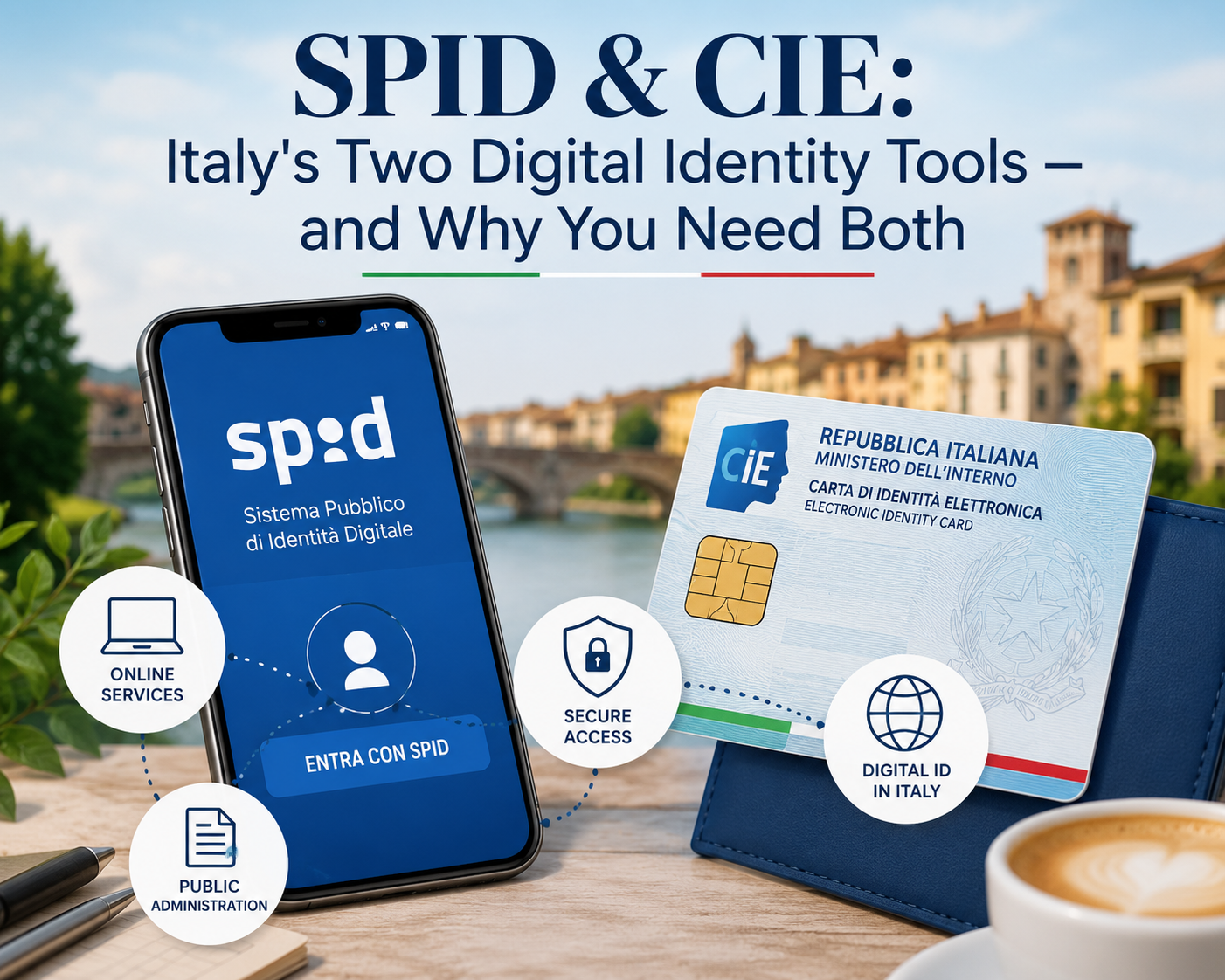
SPID & CIE: Italy’s Two Digital Identity Tools — and Why You Need Both
If you’re living in Italy, SPID and CIE aren’t optional extras — they’re how you access nearly every government service, from booking your Questura appointment to filing taxes online. Here’s how to get both. CIE — Carta d’Identità Elettronica Your Italian electronic ID card, issued by your local Comune. It’s also a digital key […]

Rental Deposit Italy: How to Get Your Money Back
How to Get Your Rental Deposit Back in Italy Protect your caparra before you even unpack — practical, legally sound advice for expats renting in Italy. Securing your rental deposit Italy return is one of the biggest worries for expats. One of the most common questions we hear is, “How can I make sure I […]

What’s On in Italy July 2026: Best Festivals & Events
From legendary bareback horse races to starlit open-air operas, discover the absolute best cultural festivals taking over the peninsula this month. July in Italy is a spectacular explosion of culture, music, and open-air celebrations. As the summer heat settles over the beautiful Mediterranean landscape, the country’s historic piazzas, ancient amphitheaters, and coastal waters transform into […]

Riding Through History: Vespa Turns 80 in the Heart of the Eternal City
From a post-war dream to a global symbol of freedom and style, Vespa is gearing up for the biggest party in its history. Vespa changed the world of urban mobility forever when an intuition on two wheels came to life eight decades ago. On April 23, 1946, Piaggio filed the patent for a “practical nature” […]

My New Life in Abruzzo: A Journey of Reinvention and Belonging
Benvenuti! Welcome to My Italian Adventure Hi, I’m Tim König, and this is the story of how my husband Giulio and I bid farewell to our familiar life in the United States to begin a vibrant new chapter in Abruzzo, Italia. What started as a late-night dream shared over coffee eventually blossomed into a full-scale […]

Find and Buy Your Ideal Property in Italy (2026)
Finding and Buying Property Investment in Italy Buying a property in Italy can be a complex and daunting process, especially for foreigners who are not familiar with the legal and bureaucratic aspects. That’s why we are here to help you every step of the way, from finding the property to signing the deed of purchase. […]

What’s On in Italy in June 2026
Festivals, Culture, Food & Summer Events June is one of the most exciting months to be in Italy. The days are long, the evenings are warm, and cities, towns, beaches, piazzas, parks, museums, and historic villas come alive with festivals, concerts, food events, outdoor cinema, and national celebrations. Whether you live in Italy, are […]

Executive Overseas Moving and Relocation Services with 1Relocation Worldwide
Global Moving Advocates: Introducing 1RELO Navigating International Relocation Logistics with Absolute Precision Relocating across international borders is a monumental lifestyle milestone, yet the physical reality of transitioning assets across continents presents an incredibly complex logistical puzzle. From navigating intricate maritime freight systems to clearing rigid port-of-entry customs checks, the operational burden requires professional, dedicated oversight. […]





Leave a Comment:
You must be logged in to post a comment.