5 Hidden Streets to Walk in Rome
UPDATED: SEPTEMBER 2026
6 MIN READ
5 Hidden Streets in Rome: Off-the-Beaten-Path Neighborhoods
Escape the tourist crowds and discover whimsical architecture, modern street art, and unique urban sanctuaries on foot
The Joy & Benefits of Walking in Rome
For millennia, Rome’s streets and piazzas have been walked and admired. As the central hub of the ancient empire’s transit network, there is a reason the famous adage “all roads lead to Rome” has stood the test of time. While millions of visitors flock to the Colosseum, Vatican, and Trevi Fountain each year, exploring hidden streets in Rome on foot remains the single best way to unlock the city’s true soul.
Beyond being a budget-friendly and sustainable way to travel, exploring on foot offers remarkable physical and mental benefits. Stepping out encourages mindfulness, lowers travel stress, and allows you to engage with the Eternal City at a relaxed, human pace.
🔍 Discover Hidden Architectural Details: Walking allows you to notice intricate door knockers, ancient marble fragments embedded in residential building walls, and tucked-away courtyards completely missed from a bus or taxi window.
☕ Engage Your Senses: Feel the texture of worn Roman cobblestones (sanpietrini), catch the rich scent of fresh espresso floating out of neighborhood cafes, and hear daily life unfolding in quiet residential pockets.
🏛️ Experience Authentic Local Life: Stepping outside the crowded tourist core reveals a modern, living capital where real Romans reside, create art, and spend their quiet afternoons.
📌 In This Guide
1. Piccola Londra (Little London)
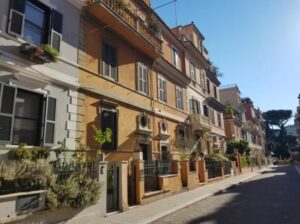
Located a few tram stops north of Piazza del Popolo in the Flaminio district, at the corner of Via del Vignola and Via Flaminia, lies Via Bernardo Celentano—though locals almost exclusively refer to it as Piccola Londra.
Designed in the early 20th century by architect Federico de Muro under Mayor Ernesto Nathan’s urban modernization plan, this private, gated street feels like a portal straight into London. Expect pastel-painted townhouses, iron railings, stone staircases, and immaculate small gardens that give off a distinct Notting Hill aesthetic. It is an ideal, peaceful walk for anyone seeking an unexpected architectural turn in Italy’s capital.
2. Quartiere Coppedè
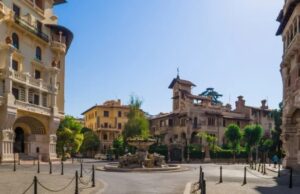
Tucked inside the northeastern Trieste neighborhood, Quartiere Coppedè is a whimsical architectural enclave designed between 1913 and 1927 by Florentine architect Gino Coppedè.
This fantasy wonderland seamlessly blends Art Nouveau, Gothic, Baroque, and Mannerist styles. As you wander through its quiet streets, keep an eye out for intricate marble and metal decorations featuring spiders, seahorses, lizards, and gargoyles carved into Craftsman-style villas. Key highlights include the magnificent archway spanning Via Tagliamento (complete with a massive wrought-iron chandelier hanging overhead) and the central Fontana delle Rane (Fountain of the Frogs) in Piazza Mincio.
3. EUR (Esposizione Universale Roma)
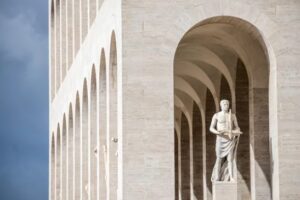
Located a short metro ride southwest of the city center, the EUR district offers a striking contrast to Rome’s ancient and Baroque historical center.
Originally planned under Marcello Piacentini for the 1942 World’s Fair (which was canceled due to WWII) and completed in the 1950s, EUR showcases grand Rationalist architecture. Walking its wide avenues feels like stepping into a life-sized architectural model. Don’t miss the Palazzo della Civiltà Italiana—famously known as the “Square Colosseum”—a stark white travertine cube adorned with classic arches and statues, which today serves as the global headquarters for Fendi.
EXPAT RELOCATION SERVICES
🇮🇹 Planning Your Permanent Move to Rome?
Navigating Italian visas, residency permits (Permesso di Soggiorno), tax codes (Codice Fiscale), or housing searches in Italy can feel overwhelming. Let us help you streamline your move with clear, English-speaking expert guidance. Check out our comprehensive Guide to Moving to Italy to get started!
4. Villaggio Olimpico (Olympic Village)
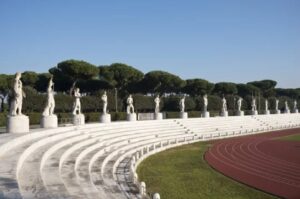
Built as prototype athlete housing for the 1960 Summer Olympics, the Villaggio Olimpico in Rome’s northern periphery is one of the city’s most fascinating planned modern neighborhoods.
Designed on concrete stilts to elevate living quarters above open green space, its duplex modernist buildings, pedestrian walkways, and open plazas were converted into permanent residential apartments after the games. Today, this peaceful, leafy neighborhood sits right at the heart of Rome’s modern cultural nexus—just steps away from Pier Luigi Nervi’s Palazzetto dello Sport, Renzo Piano’s futuristic Auditorium Parco della Musica, and Zaha Hadid’s world-renowned MAXXI Museum.
5. Quadraro Open-Air Street Art
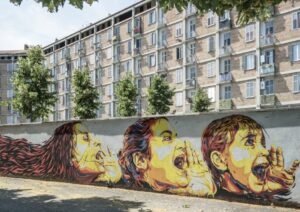
If you love street art and urban culture, head to the outer limits of Rome’s southeast periphery (easily accessible via Metro A at Porta Furba or Numidio Quadrato) to explore Quadraro.
Historically famous as a working-class stronghold and WWII anti-fascist resistance hub, Quadraro has transformed into a vibrant open-air museum known as M.U.R.O. (Museo d’Arte Urbana di Roma). Renowned international and Italian street artists—including Gary Baseman, Alice Pasquini, Jim Avignon, and Diavù—have adorned exterior walls, alleyways, and residential blocks with colorful, thought-provoking murals, making it one of the best hidden streets in Rome to get lost in with a camera.
6. Practical Tips for Walking Off the Beaten Path

VERIFIED PARTNER SPOTLIGHT
🛡️ Simple, Digital Expat Health Insurance in Italy
Health insurance is mandatory for almost every Italian visa and Permesso di Soggiorno application or renewal. Feather provides hassle-free health, personal liability, and legal insurance designed specifically for expats living in Europe—with 100% English support, instant digital proof, and fast online sign-up.
Have questions or need assistance choosing the right insurance policy for your visa or residency status? Email us at [email protected]!
Frequently Asked Questions About Hidden Streets in Rome
Are these off-the-beaten-path neighborhoods safe for solo walkers?
Yes, all these neighborhoods (including Piccola Londra, Coppedè, EUR, Villaggio Olimpico, and Quadraro) are safe residential areas. As with any major European city, maintain standard awareness of your personal belongings.
How do I get to Quadraro from central Rome?
Take Metro Line A (direction Anagnina) from Termini Station and get off at either Porta Furba or Numidio Quadrato stations. The street art open-air museum (M.U.R.O.) begins right outside the metro exits.
What is the best time of day to walk Piccola Londra?
Morning or late afternoon light offers the best photography opportunities for the pastel townhouses. Because Via Bernardo Celentano is a quiet private residential street, visitors should be respectful of local residents.