Ferragosto in Italy: What It Is and How It’s Celebrated
by Adriana ruiz
Ferragosto, celebrated on August 15th, is a significant public holiday in Italy that marks the height of the summer season. This ancient holiday has deep roots in Roman history and is a time when Italians come together to enjoy festive activities, travel, and communal gatherings. Understanding Ferragosto provides a window into Italian culture, traditions, and the importance of communal celebrations in the country.
Historical Background
The term “Ferragosto” is derived from the Latin phrase “Feriae Augusti,” which means “Festivals of Augustus.” It was introduced by Emperor Augustus in 18 BCE as a period of rest and festivities after the hard work of the harvest. Originally, Ferragosto was a time for workers to take a break, and it was customary for employers to give their workers a bonus during this period. Over the centuries, Ferragosto evolved, incorporating religious significance with the Catholic Feast of the Assumption of the Virgin Mary, which also falls on August 15th.
How is Ferragosto Celebrated?
Ferragosto is synonymous with la dolce vita – the sweet life. Italians traditionally escape the city for the countryside, the coast, or mountain retreats. Family reunions, picnics, and beach days are common themes.
1. Beach and Mountain Escapes: Many Italians head to the coast or the mountains to escape the summer heat. Popular destinations include the Amalfi Coast, Sardinia, and the Dolomites.
2. Festivals and Events: Various towns and cities host festivals, parades, and fireworks.
3. Family Gatherings and Culinary Traditions: Ferragosto is a day for reuniting with family and friends, often celebrated with picnics and outdoor lunches. Celebrations include sharing special meals and seasonal favorites such as salads, grilled foods, and fresh fruit.
4. Religious Processions: In many parts of Italy, religious processions honor the Assumption of Mary. These processions are often accompanied by music, dancing, and other festivities.
5. Ferragosto Abroad: Besides Italy, Ferragosto is also celebrated in other European countries, such as Spain and Greece, where it is a national holiday. However, customs and traditions can vary from place to place.
Ferragosto is more than just a day off; it is a reflection of Italian values such as family, community, and the enjoyment of life’s simple pleasures. It embodies the Italian spirit of “la dolce vita,” celebrating the beauty of life through food, nature, and togetherness.
In addition, Ferragosto marks a crucial time in the Italian summer calendar. It signals the peak of the holiday season, a time when cities like Rome and Milan may feel quieter as residents head to vacation spots. Conversely, tourist destinations become lively and crowded, showcasing Italy’s stunning landscapes and vibrant culture.
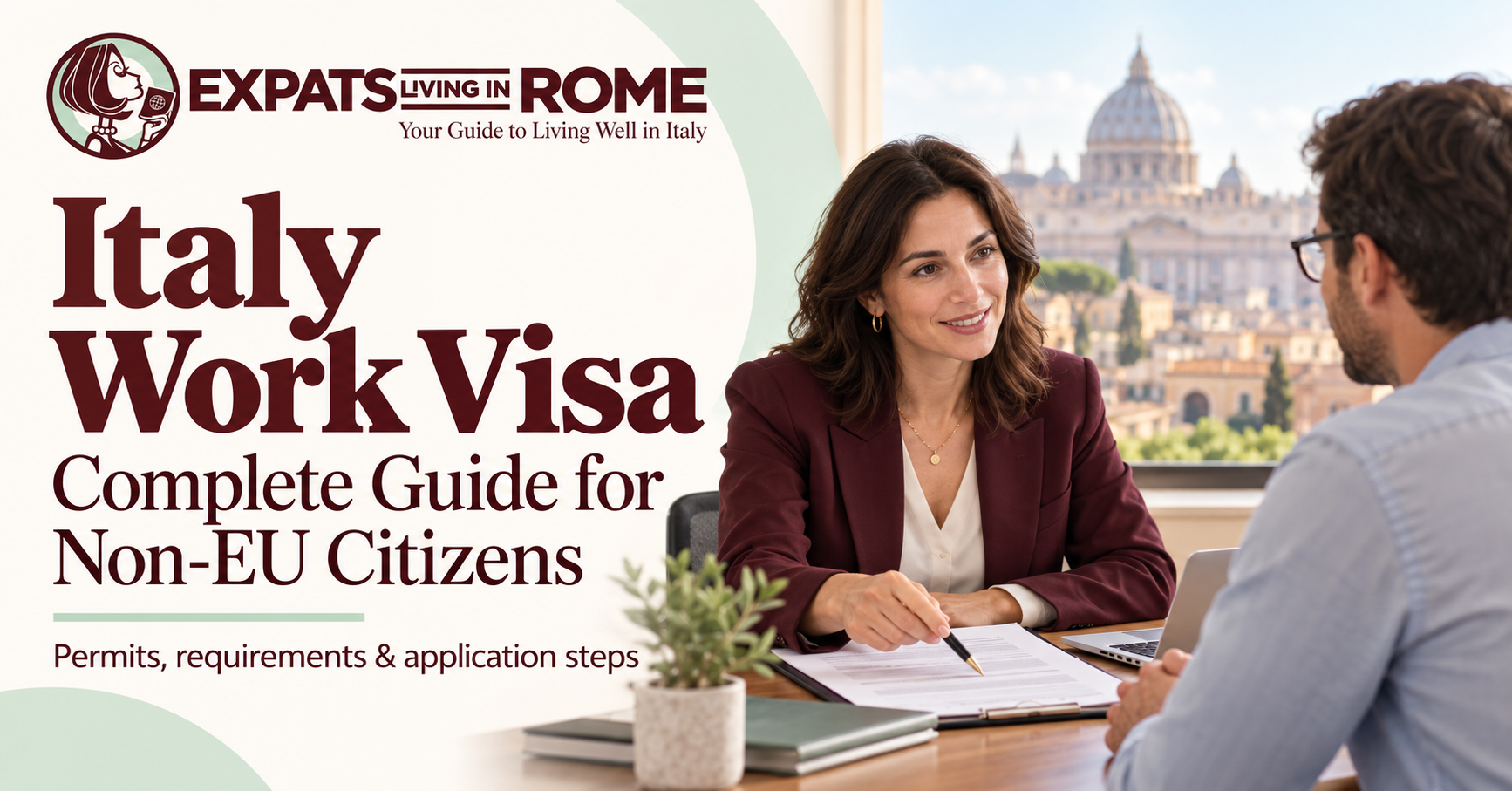
Italy Work Visa: Complete Guide for Non-EU Citizens
Italy Work Visa: Complete Guide for Non-EU Citizens Decreto Flussi quotas, the nulla osta, Type-D visas, and the EU Blue Card — every step from job offer to permesso di soggiorno, explained plainly. ⏱ 9 min read ✅ Updated: October 2026 Getting an Italy work visa as a non-EU citizen is possible — but Italy […]

English-Speaking Jobs in Rome: Complete Expat Guide
Work & Visas English-Speaking Jobs in Rome: Complete Expat Guide Where to find work, realistic salaries, Italian CV tips, and visa requirements for non-EU citizens. Updated: October 2026 | Reading time: 8 minutes Table of Contents 1. Where to Find English-Speaking Jobs in Rome 2. Realistic Salaries in Rome 3. The Italian CV Format 4. […]
Italy Strikes October 2026: Full Transport Disruption Calendar
Travel & Transit Guide Italy Strikes October 2026: Transport Disruption Calendar Full calendar of national and regional walkouts, guaranteed service hours, and EU261 refund rights. Updated: October 2026 | Reading time: 7 minutes In this guide: 1. National Strikes | 2. City & Regional Strikes | 3. Nov & Dec Outlook | 4. Guaranteed Hours […]

Expat Healthcare in Italy: Navigating the Italian Healthcare System
📅 Last Updated: October 2026 ⏱️ Read Time: 8 Min 📍 Verified Expat Healthcare Guide Table of Contents 1. The Italian Healthcare System Overview 2. Registration and Residency 3. EHIC, Private Insurance, and SSN Costs 4. Family Doctors (Medico di Base) 5. Public vs. Private Healthcare 6. Emergency Services 7. Prescriptions and Pharmacies 8. Health […]


Leave a Comment:
You must be logged in to post a comment.