Civita di Bagnoregio: A day trip with Expats living in Rome
UPDATED: SEPTEMBER 2026
6 MIN READ
Civita di Bagnoregio: The Ultimate
Day Trip from Rome
A Journey to Italy’s “Dying City”
Civita di Bagnoregio had been on my travel to-do list for a long time. When I saw the day trip event organized by Expats Living in Rome, I signed up right away. As a newcomer in Rome, booking a group excursion was the best way to make friends and explore a place that is otherwise tricky to reach by public transport.
Perched dramatically on a crumbling tufa plateau in the province of Viterbo, northern Lazio, this ancient hilltop village looks like something straight out of a fairy tale. Known across Italy as “La Città che Muore” (The Dying City), it remains one of the most memorable day trips you can take from the Eternal City.
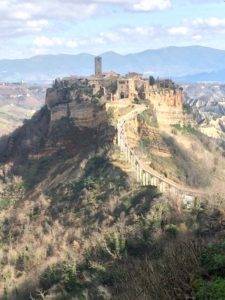
1. The Journey & Scenic Drive
The drive from Rome to Civita di Bagnoregio takes approximately 2 hours, including a quick pitstop along the highway for coffee, breakfast, or a short break. Most of the route follows the main highway before turning onto scenic country roads winding through green rolling hills, sheep pastures, and rustic farms.
Even visiting in February when the weather is crisp, a sunny day provides stunning natural light for photos of the valley.
2. Getting from Bagnoregio to Civita
Once you arrive, coaches and cars park in neighboring Bagnoregio. From the main parking area, you have two options to reach the footbridge leading to Civita:
- Walk (15 minutes): A scenic stroll through town straight to the viewpoint and bridge entrance.
- Local Shuttle Bus (3 minutes): A quick shuttle ride available for €1 round-trip, payable directly on the bus.
When you arrive at the top viewpoint near the entrance, you are greeted with a panoramic view of Civita standing isolated in the canyon—the perfect spot to pause, listen to your guide, and capture photos before making the walk across.
3. A Rich 2,500-Year History: From Etruscans to the Papal States
Civita was founded more than 2,500 years ago by the Etruscans, who chose the elevated plateau for its defensive advantage and carved out early road grids and underground tunnels.
- Saint Bonaventure’s Birthplace: Civita was the birthplace of Saint Bonaventure (born 1221, died 1274). The site of his childhood home eventually eroded and collapsed off the cliffside into the abyss below.
- 16th & 17th-Century Decline: Originally, Civita was connected to surrounding hills by over five different access roads. However, repeated earthquakes and severe soil erosion reduced its size. A major earthquake at the end of the 17th century forced the bishop and municipal authorities to relocate to nearby Bagnoregio (then part of the Papal States).
- Geological Erosion: The city sits atop a base layer of soft clay capped by volcanic tufa stone. Over centuries, rain, climate change, and river erosion washed away the clay base, gradually turning Civita into an isolated “island” surrounded by the vast Valle dei Calanchi (Valley of the Badlands). Recent collapses have even taken down former structures and wall sections that once stood before the entrance.
4. Life in the “Dying City” Today
Despite its shrinking footprint, Civita di Bagnoregio has experienced a massive revival through international travel.
- Local Population: The village has only about 7 permanent residents in winter, expanding to around 100 in summer.
- Celebrity Retreats: Its picturesque atmosphere has drawn famous actors, artists, and celebrities who have bought cottages inside the historic center.
- The Footbridge Walk: Today, the village is connected by a single 300-meter elevated footbridge. While the climb up the ramp is manageable for most at a steady pace, it can be steep for those who struggle with uphill walks. The reward at the top is a stunning 360-degree view over the canyon.
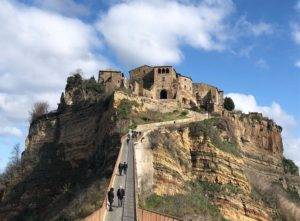
5. What to See & Do in Civita
- Porta Santa Maria: The ancient stone entrance gate carved into the tufa rock, featuring medieval stone lions holding human heads—commemorating Civita’s historic victory over tyrants from nearby Orvieto.
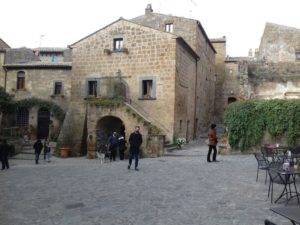
- Piazza San Donato: The village’s central dirt-and-gravel square, anchored by the Romanesque Church of San Donato (dating back to the 7th century and expanded during the 16th century).
- Geological & Landslides Museum (Museo Geologico e delle Frane): Housed in the 16th-century Palazzo Alemanni on the main square, highlighting ongoing civil engineering efforts to stabilize the cliff edges.
- Tuscia Cuisine & Wine: Stop by local trattorias for regional specialties, including hand-cut pasta, wild boar stew, bruschetta with local extra virgin olive oil, and regional wines.
6. Tickets & Practical Tips
- Entry Ticket: A €5 entry fee per person is required to cross the footbridge into Civita. All proceeds fund geological monitoring and preservation work.
- Footwear: Comfortable walking shoes are essential due to the incline on the footbridge and the historic cobblestone streets.
- Best Time to Visit: Arrive early or visit during off-peak months to enjoy the quiet medieval streets without the large tour groups.
7. Join Our Next Excursion
Joining an organized group trip with Expats Living in Rome makes reaching Civita di Bagnoregio effortless while giving you the chance to connect with an international community of expats and locals in Italy.
PLANNING AN INVESTOR VISA ITALY APPLICATION?
Get expert advice on golden visas, legal filings, tax compliance, and business setup in Italy.