Understanding the Italian Healthcare System: A 2025 Guide for Expats and Foreigners
by Adriana ruiz
Italy’s healthcare system, known as the Servizio Sanitario Nazionale (SSN), is a universal system that provides access to medical services for both citizens and residents. Each region manages its healthcare through regional systems called Sistemi Sanitari Regionali (SSR). While the system has its benefits, such as affordability and comprehensive coverage, it also faces challenges like long wait times. This article will help expats and foreigners understand how the system works, how to register, and what options are available for private healthcare.
How the Italian Healthcare System Works
The SSN is funded through taxes and provides residents with access to hospitals, general practitioners (GPs), specialists, and emergency care. Each region operates its healthcare services via the SSR, so the quality and wait times can vary significantly depending on where you live.
• Public Healthcare (SSR): The SSN/SSR covers most medical services either for free or at a very low cost (known as a “ticket”). This includes visits to GPs, hospital stays, and emergency care. However, there are often long wait times for non-urgent appointments and procedures.
• Private Healthcare: Many Italians and expats opt for private healthcare to avoid long wait times and access more personalized care. Private doctors and clinics often have shorter wait times and offer more convenience.
How to Register for Public Healthcare (SSN/SSR)
To access public healthcare, you must register with the SSN through your regional SSR at the local Azienda Sanitaria Locale (ASL). Here’s how to do it:
• Legal Residency: Ensure you have legal residency in Italy and a valid residence permit (permesso di soggiorno).
• Codice Fiscale: Obtain a tax identification number (codice fiscale) from the Agenzia delle Entrate.
• Registration: Go to your local ASL office with:
· Your residence permit
· Codice fiscale
· Proof of address
· Identity document (e.g., passport)
• Choose a GP: Once registered, you will be assigned or can choose a general practitioner (medico di base).
Costs for Public Healthcare (SSR)
• For Taxpayers: If you work in Italy and pay taxes, you are automatically entitled to public healthcare at no additional cost.
• For Non-Taxpayers: If you don’t pay taxes in Italy (e.g., retirees, students, or dependents), you may need to pay an annual fee to access the SSR.
• Ticket Fees: Even within the SSR, some services require small co-payments (“tickets”), usually ranging from €16 to €50, depending on the service and region.
What Does the SSR Cover?
The SSR provides coverage for:
• General practitioner visits
• Hospitalization
• Specialist visits (with a referral)
• Emergency care
• Vaccinations
• Some prescription medications (with partial or full co-payment)
• Diagnostic tests (e.g., blood tests, X-rays, MRIs)
Challenges of the Public System
• Long Wait Times: For non-urgent appointments, wait times can stretch to months.
• Regional Disparities: The quality of care can vary significantly between regions, with northern regions typically offering better services than southern ones.
• Language Barriers: Not all public healthcare providers speak English, which can be challenging for non-Italian speakers.
Private Healthcare in Italy
Many expats and even locals supplement public healthcare with private services. Private healthcare offers:
• Shorter Wait Times: Appointments can often be scheduled within days.
• More Personalization: Doctors tend to spend more time with patients.
• Flexibility: You can often book directly with specialists without a referral.
Cost of Private Healthcare
• Out-of-Pocket: Private consultations can range from €50-€150 for a GP or specialist visit. Diagnostic tests and imaging (e.g., MRIs) can cost between €100-€300. Here is a report on the average prices for all private and third-sector healthcare services nationwide.
• Private Insurance: A private health insurance plan in Italy typically costs between €1,300-€2,500 annually, depending on the coverage. This is especially useful for frequent medical needs or access to private hospitals.
Tips for Expats Navigating Healthcare in Italy
• Learn Basic Italian: Even a little Italian can go a long way in navigating public healthcare.
• Register Early: Start the SSN/SSR registration process as soon as you have your residence permit.
• Consider Private Insurance: If you have ongoing medical needs or want peace of mind, private insurance can be a worthwhile investment.
• Emergency Care: In an emergency, you can go to the nearest public hospital (pronto soccorso) for immediate care without worrying about registration.
• Pharmacies: Pharmacists in Italy are well-trained and can provide advice for minor ailments or direct you to the right healthcare services.
For many expats, a combination of public and private healthcare provides the best balance of cost and convenience. By understanding how the system works and planning ahead, you can make the most of Italy’s healthcare options.
Have more questions about healthcare in Italy? Share your experiences and tips in our Facebook Group! If you do not receive our newsletter it’s a good idea to sign up here.

Easter in Italy 2026: What to See, Eat, and Celebrate.
Easter, or “Pasqua,” is one of the most significant and beautiful times to be in Italy. In 2026, Easter Sunday falls on April 5th, bringing with it a week of profound religious traditions, vibrant spring festivals, and, of course, incredible seasonal food. Whether you are a religious pilgrim, a history enthusiast, or an expat looking […]
Things to Do in Italy in Spring 2026
Spring in Italy is a magical time. The weather is warm but not too hot, the flowers are in full bloom, and the cities come alive with festivals, outdoor activities, and cultural events. For expats living in Italy, it’s the perfect time to explore the country’s diverse landscapes and vibrant culture. Here’s a breakdown of […]

What’s on in Italy: March 2026 | Events in Italy You Won’t Want to Miss!
What’s On in Italy: March 2026 Events Expats Will Love Posted on March 2, 2026 March in Italy is a month of vivid transformation. As the winter chill recedes, the peninsula bursts into life with spring festivals, high-energy sporting events, and significant cultural anniversaries. Whether you are looking for historic re-enactments, world-class rugby, or the […]
Buying Property in Italy: Why You Need a Strategic Consultant
Buying Property in Italy: 4-Phase Strategic Purchase Plan A comprehensive framework for expats and investors to navigate the Italian real estate market with professional precision. Do you dream of a farmhouse in Tuscany, a luxury villa on Lake Como, or a seaside home in Puglia? Whether you are looking for an investment apartment in Rome […]
Long & Short Term Rental Assistance in Italy
Book a 15-minute Free Call Today! Securing a rental property in Italy requires deep knowledge of local laws and fluency in Italian. These are often the biggest hurdles for internationals moving to Italy. Our specialized rental assistance service provides the expertise you need to secure your ideal home with confidence and legal security. With our […]

What’s On in Italy: January 2026 Events Expats Will Love
January in Italy may be quieter than the summer months, but it’s packed with culture, tradition, fashion, and great opportunities to explore without the crowds. From iconic festivals and fashion weeks to free museum days and winter food experiences, here are 12 events happening across Italy in January 2026 that expats shouldn’t miss. 🔥 Fòcara […]
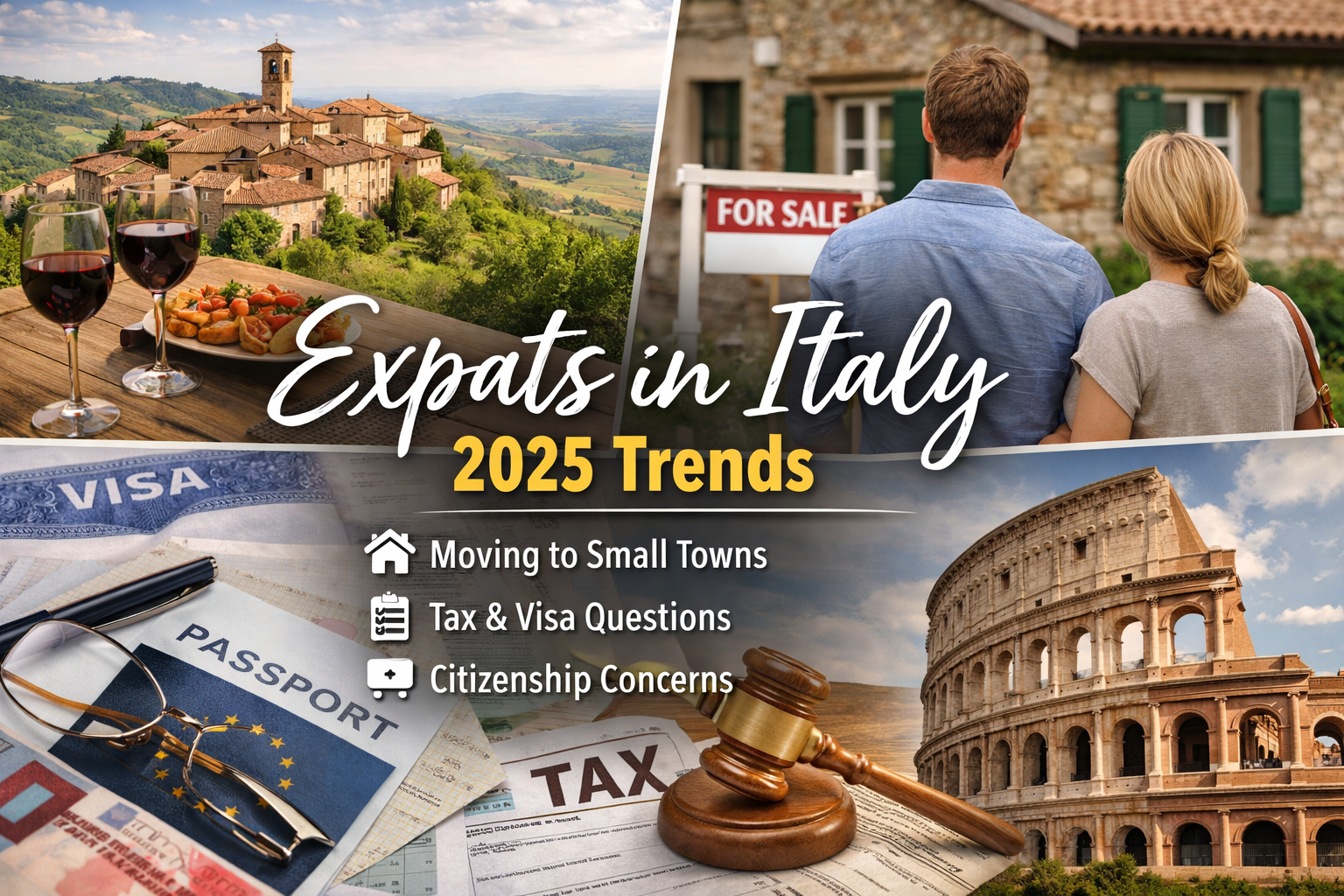
The Year Italy’s Expat Landscape Shifted
Italy’s expat community experienced notable changes in 2025. While metropolitan hubs like Rome and Milan remain magnets for international residents, the most striking trend has been the surge of expats relocating to smaller Italian towns—many with populations under 20,000. For many, this shift reflects affordability concerns, evolving lifestyle priorities, and the changing policy environment around […]

How to Navigate the Property Search and Purchase Process in Italy
Looking to buy property in Italy? We are here to help you step by step! Have you always dreamed of owning a home in Italy—whether it’s a charming countryside farmhouse, a coastal villa, or a cozy apartment in a historic town? We’re here to help turn that dream into reality. Buying real estate in […]