Understanding Salaries in Italy: A Guide for Expats and Newcomers
by Adriana ruiz
If you’re an expat living in Italy or someone considering relocating, understanding the salary landscape is key to planning your life in the country. This article provides an overview of average salaries in Italy in 2024, how they vary by profession, age, gender, education, and region, as well as how they compare to other European nations.
Average Salary in Italy
The average gross annual salary (RAL) in Italy for private sector employees is around €30,284, according to data from the JobPricing Observatory. Salaries can differ greatly depending on your role:
- Executives: €103,418
- Managers: €55,632
- Office Employees: €32,174
- Manual Workers: €25,522
Net salaries (after taxes and deductions) vary depending on the number of monthly payments (13 or 14) in a year. For example, a manager may take home €2,668 on a 13-month payment plan, while an executive earns €4,473. Office employees and manual workers typically earn around €1,818 and €1,524 net respectively.
Public vs. Private Sector Pay
Public sector workers in Italy earn slightly more than their private sector counterparts, with an average gross annual salary of €37,073.
Top-Paying Professions and Industries
Highly skilled sectors lead the way in terms of salary:
- Banking and Financial Services: Average salary €46,354
- Engineering: Average salary €40,372
- Pharmaceuticals and Biotech: Average salary €39,209
On the other end, lower-paying sectors include personal services, hotels, and restaurants, where specialized skills are less in demand.
Salary by Age
Salaries in Italy increase with age, though the rate of growth slows over time. Here’s a breakdown by age group:
- 15-24 years: €24,588
- 25-34 years: €27,028
- 35-44 years: €29,831
- 45-54 years: €31,926
- 55-64 years: €34,057
Regional Salary Differences
There’s a notable 14% gap between salaries in Northern and Southern Italy. The highest salaries are found in Lombardy (€33,452), Lazio (€32,360), and Liguria (€32,156). Meanwhile, regions like Basilicata, Calabria, and Puglia offer the lowest average salaries, ranging from €26,055 to €27,261 annually.
At the provincial level, Milan, Trieste, Rome, and Bologna top the list for the highest salaries, while Matera, Crotone, and Ragusa are at the bottom.
Comparing Italy with Europe
In comparison to other EU countries, Italy’s average salary is slightly below the European average. The average gross annual salary in Italy is around €34,736, while the OECD average stands at €45,217. In comparison to neighboring European countries, Italy falls behind nations like Luxembourg, Denmark, and Ireland, where salaries exceed €50,000 per year.
Salary Growth and Real Wages
While nominal wages have seen slight increases over recent years, real wages (adjusted for inflation) are expected to start recovering only from 2024, with a projected growth of 1.3%.
Education and Salary
The more educated you are, the higher your potential salary in Italy. A degree, particularly in fields like Economics, Engineering, Medicine, and Pharmacy, significantly increases earning potential. On average, university graduates earn around 2.5 times more than those with only a middle school education.
Gender Pay Gap
Italy still faces challenges with the gender pay gap, especially in the private sector where the gap stands at 16.5%. In the public sector, however, the gap is one of the lowest in Europe at 4.1%. Men earn an average of €31,286 annually, compared to €28,565 for women.
Factors Influencing Salaries
Several factors influence salary levels in Italy:
- Location: Northern cities like Milan and Rome offer higher wages.
- Industry: Highly specialized industries such as finance and pharmaceuticals pay the most.
- Education: Higher education translates to higher earnings.
- Experience: Salaries grow steadily with years of experience.
Hourly Wages and Cost of Living
The average hourly wage in Italy is €11.69. However, the cost of living, especially in cities like Milan and Rome, can be steep. In contrast, smaller southern towns offer lower living expenses but also lower wages.
In Summary
Salaries in Italy vary significantly depending on multiple factors such as location, profession, and experience. If you’re planning to relocate to Italy, it’s important to research the local salary ranges, the cost of living, and the industries with the best prospects to make an informed decision about your financial future.
Source: Forbes
Subscribe to our newsletter to access content and updates to help navigate life as an expat in Italy. If you need help with your citizenship process, language courses, or general expat life in Italy, email us at [email protected].

Permesso di Soggiorno Renewal Italy: 6 Easy Steps
Permesso di Soggiorno Renewal Italy: 6 Essential Steps Deadlines, kit postale, costs, and your legal rights while waiting Updated: August 2026 | Reading time: 10 minutes In this guide: 1. When to Renew | 2. Required Documents | 3. Costs & Fees | 4. Kit Postale Process | 5. Questura Appointment | 6. Legal Rights […]

Jure Sanguinis Italy: 5 Easy Steps to Citizenship
Updated: August 2026 7 Min Read Jure Sanguinis Italy: Updated Citizenship by Descent Guide How Court Rulings and Law 74/2025 Affect Your Application If you are planning to apply for Jure Sanguinis Italy citizenship through your ancestral heritage, the legal landscape in Italy has undergone major developments. Between landmark High Court rulings overturning administrative restrictions […]

Italy Events September 2026: 7 Unforgettable Festivals
Italy September Events: 5 Top Festivals & Celebrations Film premieres, wine harvests, medieval pageants, and local travel tips Updated: August 2026 | Reading time: 8 minutes In this guide: 1. Major Cultural & Film Festivals | 2. Wine Harvests & Sagre | 3. Historical Reenactments | 4. Essential Travel Tips | 5. Key Questions September […]

US Expats Italy Taxes: The Complete 2026 Guide
Expat Tax & Finance 🕒 Updated: August 20, 2026 ⏱️ Reading Time: 8 min read Taxes for US Expats in Italy: The Complete 2026 Guide Understanding citizenship-based taxation, foreign tax credits, FEIE thresholds, and how to avoid double taxation while living in Italy. Navigating Dual Tax Systems as an American in Italy Mastering US expats […]

Gyms in Italy for Expats: Ultimate 2026 Fitness Guide
Expat Living & Wellness 🕒 Updated: August 20, 2026 ⏱️ Reading Time: 8 min read Gyms in Italy for Expats: Ultimate 2026 Fitness Guide From 24/7 budget chains to luxury wellness centers with spas and pools — your complete guide to staying fit across Rome, Milan, Florence, and beyond. Finding the Right Fitness Center in […]

Italian Healthcare for AIRE Citizens: 2026 SSN Rules
Italian Healthcare for AIRE Citizens 🕒 Updated: August 19, 2026 ⏱️ Reading Time: 6 min read Italian Healthcare for AIRE Citizens: 2026 SSN Rules & Costs Italian citizens registered with AIRE now have an official path back into Italy’s National Health Service — here is what it costs, who qualifies, and what the coverage includes. […]

Investor Visa Italy 2026: Requirements, Tax Benefits & Rules
Investor Visa Italy 2026 Guide 🕒 Updated: August 19, 2026 ⏱️ Reading Time: 9 min read Investor Visa Italy 2026: Requirements, Tax Benefits & Rules Everything high-net-worth individuals, foreign entrepreneurs, and investors need to know about acquiring Italy’s Golden Visa in 2026. Investor Visa Italy: Residency Through Investment The Investor Visa Italy (often called Italy’s […]
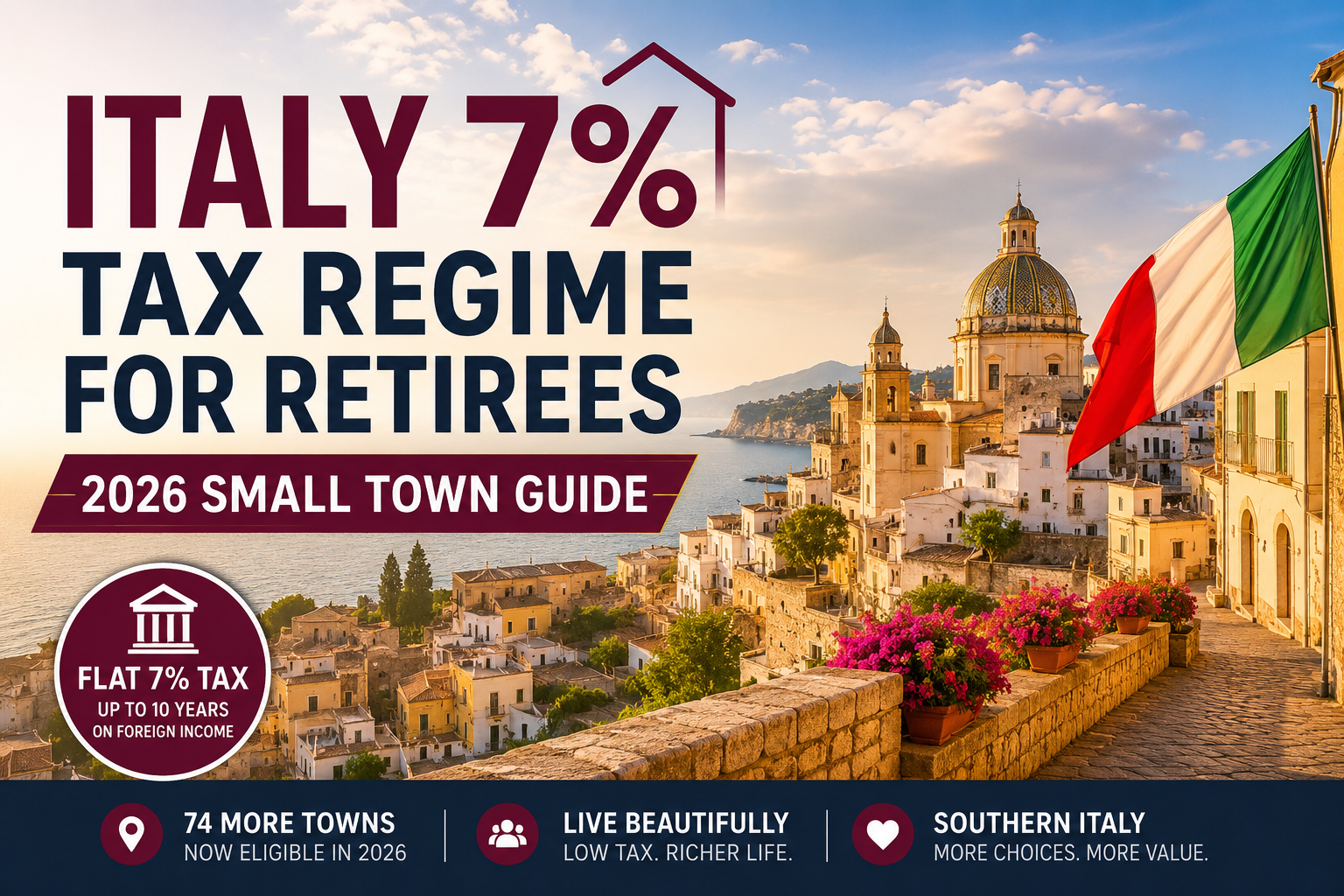
Italy 7% Tax Regime for Retirees: Ultimate 2026 Guide
Retirement & Taxes in Italy 🕒 Updated: August 19, 2026 ⏱️ Reading Time: 8 min read Italy 7% Tax Regime for Retirees: Ultimate 2026 Guide Discover how foreign pensioners moving to qualifying southern Italian municipalities can lock in a flat 7% tax rate on all overseas income for 10 years. Overview of Italy’s 7% Pensioner […]